 TPM
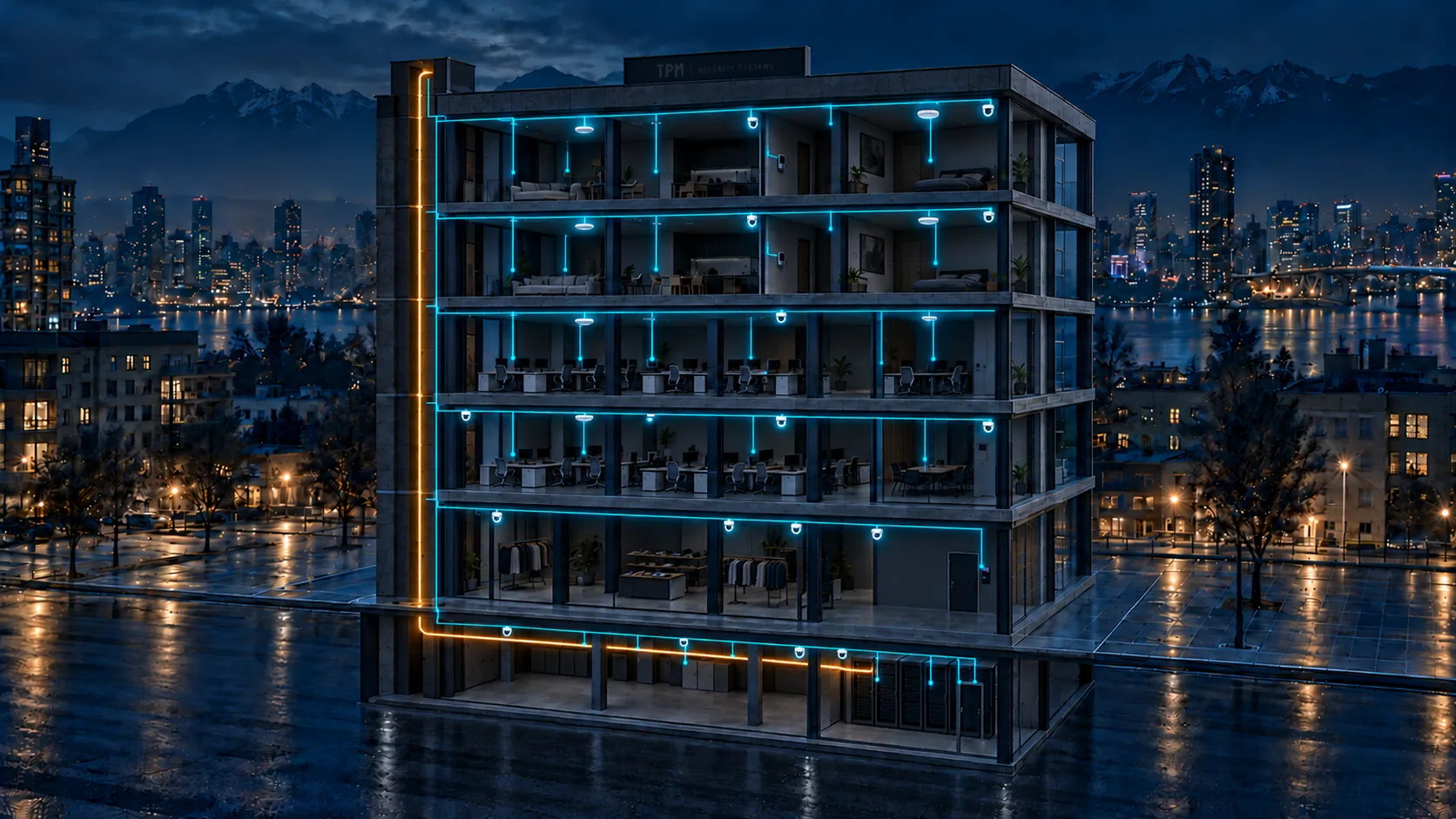
Cabling is installed once and used for decades. Equipment gets replaced every five to ten years, but the cable in the walls usually stays as long as the building. That’s why the choice between Cat6 and Cat6A deserves a few minutes of thought before the drywall goes up.
The short version
| Cat6 | Cat6A | |
|---|---|---|
| 10 Gb/s distance | Shorter runs only (roughly up to 55 m, depending on conditions) | Full 100 m channel |
| Cable size | Thinner, lighter, easier to pull | Thicker and stiffer; needs more pathway space |
| Heat with high-power PoE | Fine in small bundles | Handles heat better in large bundles |
| Cost | Lower material and labour | Higher material and labour |
Where Cat6A pays off
- Wi-Fi access points. Current access points often connect at 2.5 or 5 Gb/s, and newer generations keep pushing higher. Access points are also the devices most likely to be upgraded. Running Cat6A to them is cheap insurance.
- High-power PoE devices. PTZ cameras, some access points and powered displays draw more power over the cable, and large bundles of powered cables run warm. Cat6A copes with that heat better.
- Long runs in commercial buildings. If a run is close to the 90 m permanent-link limit and you might ever want 10 Gb/s, Cat6 won’t get you there.
Where Cat6 is still sensible
- Homes and small offices where runs are short.
- Desk outlets for computers and phones, which rarely need more than 1 Gb/s.
- Most fixed security cameras, which use little bandwidth.
Don’t forget the pathways
Cat6A’s larger diameter means fewer cables fit in the same conduit, sleeve or tray. If a project switches to Cat6A late, pathways sized for Cat6 can fill up fast. Decide early, and size conduits and sleeves with some spare room for future cables.
What matters as much as the category
A great cable installed badly performs like a bad cable. Tight bends, crushed bundles and cables run beside power lines all cause problems. Ask for every link to be tested and certified to the category installed, and for the test reports and labelled drawings at handover. That’s how you know you got what you paid for.
Our usual recommendation: Cat6A for access points, backbone-adjacent runs and anywhere you expect high-power PoE. Cat6 for desks and standard cameras on smaller projects. Fiber for anything between floors or buildings.